Gastrointestinal (GI) Division Program

The GI Division at the Centre Hospitalier de l’Université de Montréal (CHUM) is one of the largest and most active gastrointestinal research units in Canada. Our research program is dedicated to advancing the prevention, diagnosis, and treatment of gastrointestinal cancers and other digestive diseases. By integrating clinical research, innovative technology development, and patient-centered outcomes evaluation, we aim to improve care and outcomes for our patients.

Our multidisciplinary program brings together clinicians, researchers, engineers, and data scientists to pioneer new approaches in GI endoscopy and cancer prevention.

The GI Division Research Program is built on three main pillars:

CEDIA
Centre for Endoscopic
Data Integration and Analysis

Endoscopic Oncologic
Resection Program

Endoscopic Colorectal
Cancer Prevention Program


Each of these programs is supported by internal and external collaborations and benefits from national research funding, including multiple Canadian Institutes of Health Research grants. Click on each section below to learn more about our specialized initiatives.

Together, these three integrated programs form the foundation of the GI Division Research Program, a nationally leading initiative aimed at improving digestive health and cancer prevention through cutting-edge research and innovation.

CEDIA - Center of Endoscopic Data Integration and Analysis

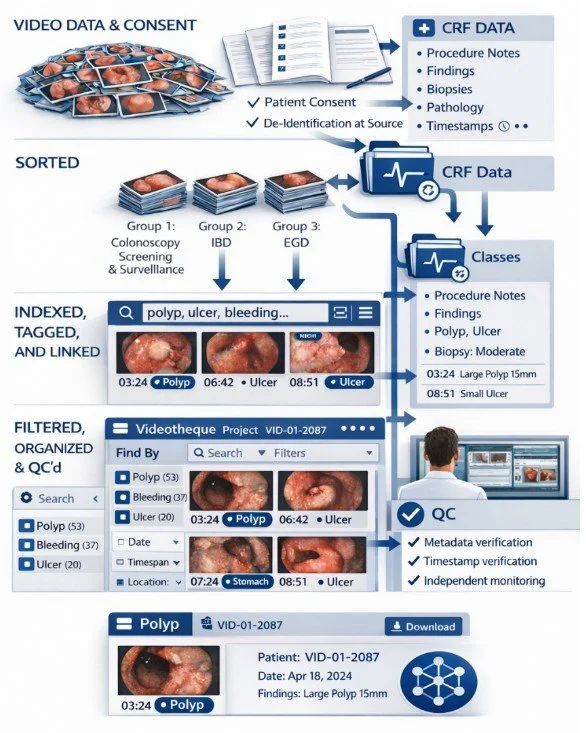
CEDIA is our dedicated hub for the development, integration, and analysis of endoscopic data to support artificial intelligence research in gastroenterology. The CEDIA team curates and manages high-quality datasets derived from real-world clinical procedures to train and validate AI models, including convolutional neural networks (CNNs) for computer vision and natural language processing (NLP) models for automated reporting and documentation.

We collaborate with academic and industry partners to develop clinically applicable AI solutions that enhance diagnostic accuracy, standardize reporting, and improve overall quality in GI endoscopy. A core focus of CEDIA is gastrointestinal cancer prevention, leveraging AI to detect precancerous lesions and optimize screening workflows. Rigorous validation and evaluation of AI tools in real clinical settings are central to our approach, ensuring that innovation translates to improved patient care.

Endoscopic Oncologic Resection Program

Placeholder

Innovation in Early Detection

The Endoscopic Oncologic Resection Program focuses on advancing the science and practice of endoscopic resection for premalignant and early malignant lesions throughout the GI tract. Through research and innovation, we develop and evaluate novel techniques and devices that allow for the safe and effective removal of these lesions.

Placeholder

Reduced Surgical Interventions

Endoscopic resection is a minimally invasive alternative to surgery, offering patients curative treatment with fewer risks, shorter hospital stays, and quicker recovery times. This approach reduces the need for surgical interventions, ultimately benefiting both patients and the healthcare system.

Placeholder

Ongoing Research

Our program is currently conducting two Canadian Institutes of Health Research-funded randomized controlled trials (RCTs) evaluating the safety and efficacy of advanced endoscopic resection methods for large colorectal polyps. Our goal is to continuously improve outcomes and set new standards in the management of GI neoplasia.

Endoscopic Colorectal Cancer Prevention Program

Prevention of colorectal cancer is a central focus of our research activities. The Endoscopic Colorectal Cancer Prevention Program seeks to optimize colorectal cancer screening and surveillance strategies through high-quality endoscopic techniques.

We collaborate with national and international research networks to identify best practices in endoscopy, evaluate new technologies and techniques, and ensure quality benchmarks are met across institutions. Our work includes large-scale studies assessing detection rates, optical diagnosis performance, surveillance interval strategies, and training methods.

This program is supported by several funded initiatives from the Canadian Institutes of Health Research, American Society for Gastrointestinal Endoscopy, and Canadian Association of Gastroenterology. It aims to generate impactful, practice-changing evidence to advance colorectal cancer prevention at a population level.
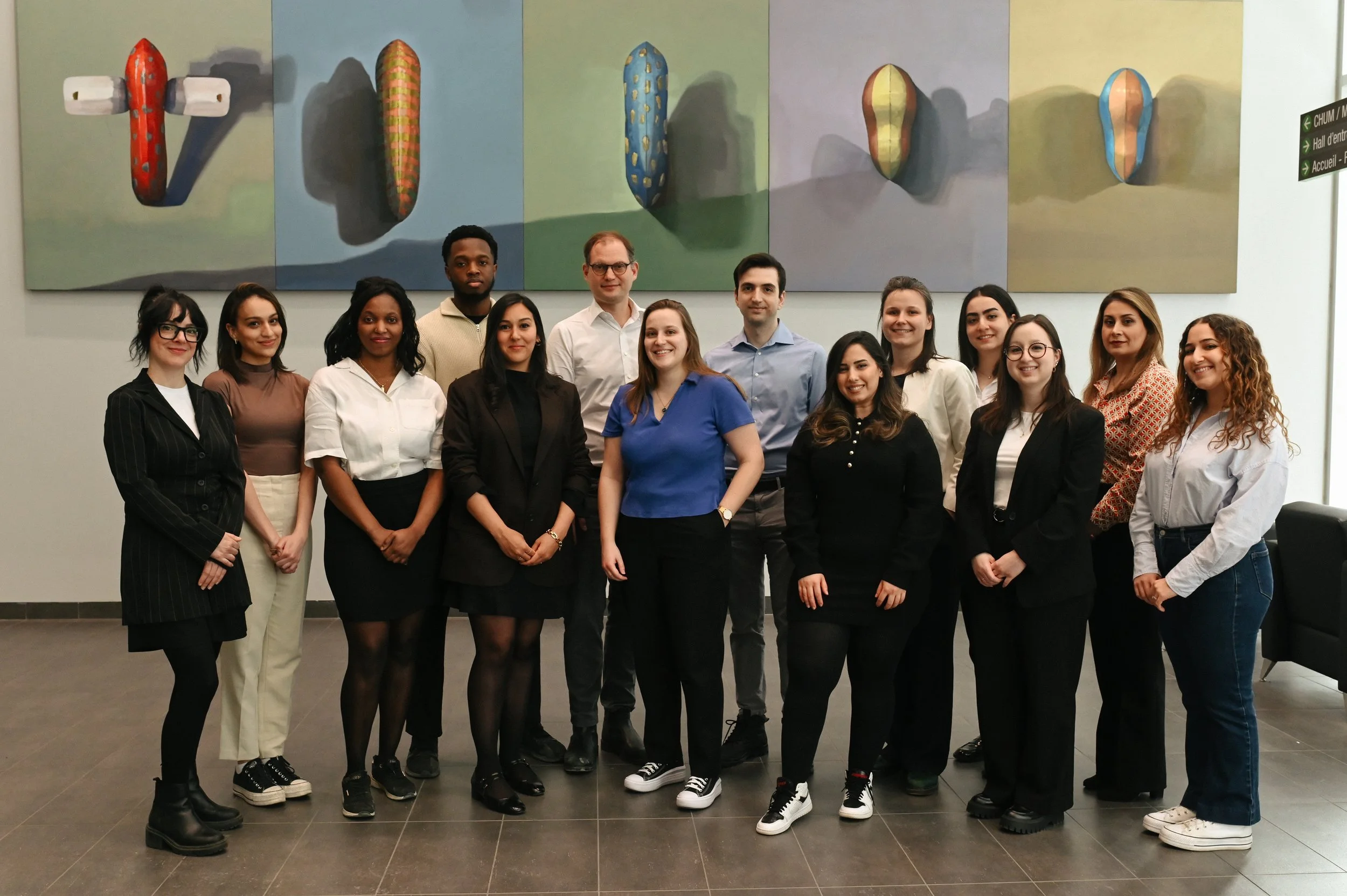
Meet the Team

  • Daniel Von Renteln

    Director of the Research Program

  • Roupen Djinbachian

    Co-Director of the Program

  • Samira Hanin

    Head of Clinical and Regulatory Affairs

  • Ghislaine Ahoua

    Research Coordinator

  • Nikoo Mashayehky

    Data Scientist

  • Victoire Michal

    Biostatistician

  • Mira Kandlikar Bloch

    Data Scientist

  • Djihane Abdesselam

    Research Assistant

  • Yasmine Zaher

    Research Assistant

  • Sarah Touzet O'Neil

    Research Assistant